

Overview: Many people genuinely want to comfort parents of children with special needs or medical complexities, but the phrases they offer often feel minimizing or hurtful. This page explains why platitudes miss the mark and how caregivers can process these interactions with honesty and grace. Receive the heart. Release the words.
The diagnosis was less than a week old when someone at church hugged me and whispered, “God only gives special kids to special parents.”
They smiled—the kind of smile that expected gratitude, not the tightness in my throat or the sudden weight of my child’s diagnosis pulling me down through the church floor. So I smiled back, because what else do you do when someone’s trying to help?
But inside, I was screaming. Or numb. Or both. I’m not even sure anymore.
They keep saying things. Different voices, same words. Not because they’re cruel, but because suffering is hard to witness—and platitudes feel safer than silence.
We can’t control what they say. But we can control what we do with it.
The Hula Hoop Principle
My uncle counseled a lot of people. He used to toss a hula hoop on the ground and ask the person to step inside. “Which part of the world can you control,” he’d ask, “the inside or the outside of this circle?”
I laughed the first time. It seemed obvious.
I’m not laughing anymore. Because when someone says “God only gives special kids to special parents,” I’m standing inside my hoop drowning in schedules and “unanswered” prayers, while they’re commenting from outside it. And the gap between those two spaces has never felt wider or more unbridgeable.
I can’t script what people say from outside my hula hoop. But I can choose what I pick up and carry inside it.
Here’s what I’m learning, building a biblical toolkit for responding with grace while protecting my heart when comfort misses the mark.
Chief among the lessons: Receive the heart. Release the words.

Platitude #1: “At Least It’s Not Worse/At Least You Have…” — Why Minimizing Pain Hurts Caregivers
Why it hurts:
They’re trying to help me find gratitude, but what I hear is: “Your pain doesn’t count. Someone has it worse, so stop complaining.” It’s the grief Olympics. And nobody wins.
Every time someone says this, they’re handing me an invisible measuring stick. I’m supposed to hold my child’s struggles up against someone else’s and conclude mine don’t matter enough to grieve. The mother whose child can’t walk shouldn’t complain because at least he’s alive. The mother whose child died shouldn’t grieve too long because at least she had him for a while. There’s always someone worse off, which means none of us are allowed to hurt.
What’s actually true:
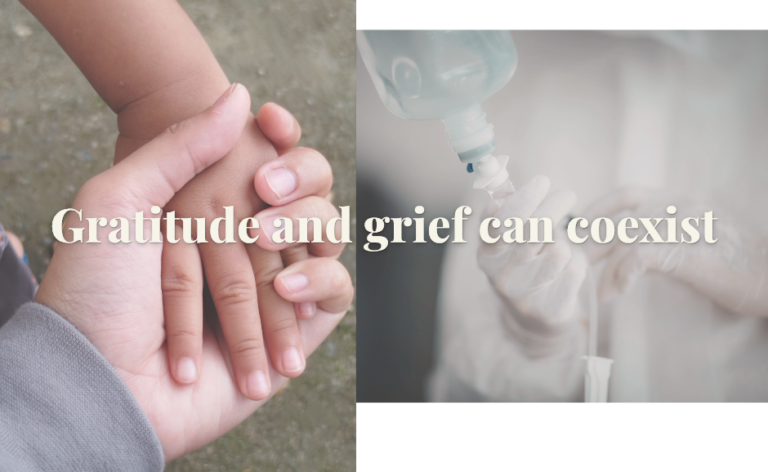
Gratitude and grief aren’t enemies. They’re companions on the same hard road.
Philippians 4:6–7 doesn’t say “only bring thanksgiving”—it says bring prayer, supplication (which means begging), AND thanksgiving. All together. The Bible never makes us choose between acknowledging what’s good and mourning what’s hard.
I can say—and mean both—“I’m grateful my child is alive” and “I’m grieving the future I thought we’d have.” Both. Are. True.
How I’m choosing to respond:
- “You’re right, I’m grateful for what we do have. And it’s still really hard.”
- “I’m working on holding both gratitude and grief.”
What I need to remember:
The “at least” people want me to pick between grief and gratitude. But the Bible doesn’t make me choose.
Platitude #2: “Have You Tried [Insert Solution]?”— When Fix-It Advice Feels Dismissive
Why it hurts:
Because I have. Or I have valid scientific reasons why the suggestion won’t work for our specific situation.
I’ve spent hours researching (those of you who know me personally, stop laughing!). We’ve considered thousands of dollars in therapies. I’ve wasted countless nights wondering if I’m doing enough. This phrase makes me feel like a failure—like if I just tried harder, read more, researched better, my child would be fixed.
And here’s what cuts deepest: it assumes the problem is solvable, that the right intervention exists if only I were competent enough to find it. Every “Have you tried…?” carries an unspoken accusation: You haven’t done enough.
What’s actually true:
Galatians 6:9 doesn’t say “if you find the right protocol”—it says “let us not grow weary of doing good, for in due season we will reap, if we do not give up.”
My job isn’t to fix my child. It’s to love them, advocate for them, and show up—even when nothing changes. Sometimes the answer isn’t a cure. It’s grace to endure faithfully. I’m responsible for faithfulness, not outcomes.
How I’m choosing to respond:
- “We’re working with a great team. I appreciate you thinking of us.”
- “We’ve explored a lot of options. Right now we’re focusing on what’s working.”
What I need to remember:
1) I don’t owe anyone an explanation. The boundary can be set gently, but I still get to set a boundary.
2) It’s far more fruitful to pray for His presence than for specific outcomes.
Platitude #3: “God Only Gives Special Children to Special People” — The Pressure Behind the Praise
[In-depth look | Field guide entry]
Why it hurts:
I don’t feel special. I feel tired and like the wrong personality for this assignment.
This phrase turns my child’s diagnosis into a referendum on my spiritual maturity. It means if I’m struggling—if I lose my temper, if I hide in the bathroom to cry, if I resent other families’ ease—maybe I’m proving the statement wrong. Maybe God made a mistake choosing me.
It also reduces my child to a cosmic test of my character. As if their existence is primarily about my spiritual formation rather than their own inherent, irreplaceable worth.
What’s actually true:
I was chosen in love before I ever became a parent (Ephesians 1:4–5). God’s not looking for the strongest parents—He’s working with people who know they need Him.
My belovedness has nothing to do with how well I’m handling this. It was settled before the foundation of the world. Before I succeeded at anything. Before I failed at anything. Before this diagnosis. Before this exhaustion. Before any of it.
How I’m choosing to respond:
- “Some days I definitely don’t feel special, but I love my kid deeply.”
- “Most days I feel pretty ordinary and very tired.”
What I need to remember:
“My grace is sufficient for you, for my power is made perfect in weakness.” (2 Corinthians 12:9)
My identity is “beloved child,” not “special parent.”
Platitude #4: “Everything Happens for a Reason” — When Causation Tangles with Redemption
Why it hurts:
If I can’t see the reason, maybe I’m not spiritual enough. Maybe if I had more faith, I’d understand.
And frankly, why is this only said about our one child and not the other? Nobody whispers “everything happens for a reason” about my typically-developing child’s successes. It’s only said about hardship, which makes the implication clear: this adversity is either a tool for someone else’s growth or evidence of someone’s failure.
Either feels unbearable.
What’s actually true:
Some things simply happen because we live in a broken world, the result of the fall. Romans 8:28 says He works all things together for good—not that all things are good—for those who are called according to His purpose.
Sovereignty means God can bring redemption from ashes. Causation would mean He lit the fire. We believe the first. We reject the second.
There’s a difference between God causing something and God using something. He didn’t send this diagnosis to teach me patience. But He will meet me in it. He will not waste it. And somehow—in ways I may never understand this side of eternity—He will weave even this thread into something beautiful.
How I’m choosing to respond:
- “I’m trusting God is with us in this, even when I can’t see the reason.”
- “I believe God can work through anything, but I may always wrestle with the ‘why.’ ”
What I need to remember:
“Jesus wept.” (John 11:35)
Even knowing He’d raise Lazarus, Jesus still wept at the grave. Grief is valid, not a failure to see God’s plan.
Platitude #5: “God Won’t Give You More Than You Can Handle” — The Burden of Forced Strength
Why it hurts:
I’m already handling more than I can handle.
I forgot the beans for tonight’s dinner. There are four appointments this week. I snapped at my typically-developing child this morning over pouring her water into the remainder of her oatmeal—not because of the “experiment”, but because I’m so tired I could weep at… well, just about anything.
If God only gives what we can handle, and I can’t handle this, the math is simple: I’m failing. This phrase sounds like encouragement, but it lands like an indictment. It means my struggle is proof of spiritual inadequacy.
What’s actually true:
God absolutely gives us more than we can handle. Not because He’s cruel, but because we were never meant to handle it alone.
Paul said it plainly in 2 Corinthians 1:8–9—he was “burdened beyond our strength” so that he would “rely not on ourselves but on God.” The crushing isn’t the punishment. It’s the invitation.
Dependence isn’t failure. It’s the design.
How I’m choosing to respond:
- “Thank you for caring. It does feel like a lot right now.”
- “I appreciate that. I’m learning to lean on God more than I ever have.”
What I need to remember:
“My grace is sufficient for you, for my power is made perfect in weakness.” (2 Corinthians 12:9)
The breaking isn’t evidence I’m failing. It’s evidence I’m finally in position to receive His strength… and serve out of the overflow of His empowering.
Want to dive deeper? “God Won’t Give You More Than You Can Handle”
Platitude #6: “Just Give It to God / Let Go and Let God” — Why Spiritual Shortcuts Can Feel Invalidating
Why it hurts:
We ARE giving it to God. Every single agonizing day.
We’re praying through tears, begging Him for strength, crying out in the middle of the night when no one else is awake. This phrase sounds like we’re holding on too tight, like our struggle itself is the problem. Like if we just surrendered more completely, everything would feel better.
But here’s the trap hidden in this phrase: it sounds deeply spiritual while actually promoting emotional bypass. It suggests that faith means never feeling the weight, that true surrender produces immediate peace, that if we’re still struggling we haven’t really “let go” yet.
What’s actually true:
Surrender isn’t passivity. It’s active trust.
Proverbs 3:5–6 says “in all your ways acknowledge him”—not “instead of your ways.” You still act, plan, advocate, parent. You’re just doing it while trusting Him with the outcome you cannot control.
Jesus in Gethsemane sweat drops of blood while surrendering. He said “not my will, but yours”—and then went to the cross anyway. The surrender was real. So was the agony. The trust was active precisely because the suffering was real.
How I’m choosing to respond:
- “I’m trying to trust Him with it, even when it feels impossible.”
- “I think I am giving it to God—I’m just also still feeling all of it.”
What I need to remember:
Surrender = Honesty + Trust. Not apathy. Not emotional detachment. Not the absence of feeling. Just open hands, even when they hurt to unclench.
How Can We Respond to Platitudes
The platitudes will keep coming from outside our hula hoops. People will keep trying to help by saying things that hurt.
It’s okay to feel that—and it’s okay to let it go. Receive the heart. Release the words.
Because here’s what I’m learning: God doesn’t stand outside the circle commenting on your life. He steps inside it. He stands where you stand.
Some days you’ll believe Him. Some days you won’t.
He’s not waiting for you to get it right.
He never was.
He’s standing inside your hula hoop—inside the mess, the medical bills, the midnight terrors, the measuring and weighing and wondering if you’re enough. And from that space, that intimate impossible holy space where He sees what no one outside your circle can see, He whispers the only words that matter:
“I’m here. You’re Mine. And beloved one, that is enough.”
Three Things to Remember
- Others are not wrong to care. They’re just often wrong about what helps. I know I sound like a broken record: Receive the heart, release the words.
- Our struggles don’t mean we’re failing. They mean we have another place to connect with God.
- It’s okay to feel hurt. However, we also have tools to not stay stuck there.
Dive deeper into the platitude that hits hardest
Which phrase hits you hardest right now? This series will be expanded so that you will be able to click through to read the full biblical response, complete with:
- Scripture in context
- Practical tools for renewing your mind
- What to pray from inside your hula hoop
We’re in this together.
Next: “God Won’t Give You More Than You Can Handle” →
If this resonated, I’d love to hear which platitude you’re wrestling with most. Leave a comment, contact me, or share this with someone who needs permission to feel what they’re feeling.
FAQ
Why do platitudes hurt special needs caregivers?
Because they unintentionally minimize emotional complexity and suggest simpler solutions than the lived reality.
Is there another article about HOW to support?
YES! Here are 14 ways to support parents impacted by unexpected diagnoses at various stages.
What kind of support actually helps special needs parents?
Empathy, presence, and acknowledging difficulty rather than trying to fix or interpret it.
Does my support really matter that much?
Absolutely! You are invaluable, however you choose to support the caregivers walking a hard road.